
By Sydney Case, Editor-in-Chief
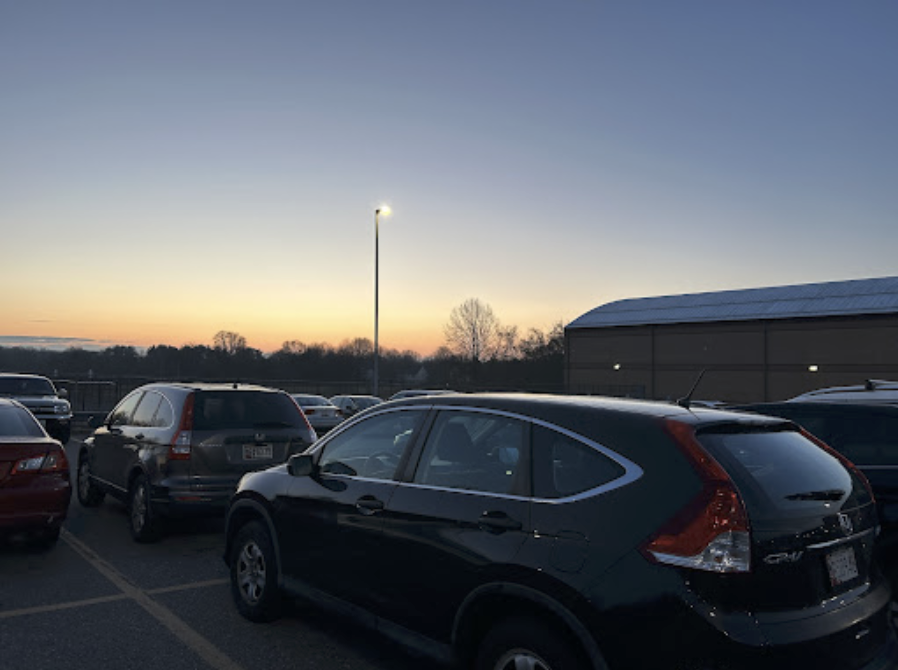
A new parking policy at River Hill High School has changed the way students are prioritized for parking passes, leaving some juniors and seniors without release time concerned about how they will get to and from school.
Under the new system, parking passes are first prioritized for seniors with release time, followed by juniors with release time. After those students receive passes, 90 spaces are available on a first-come, first-served basis for seniors without release time. Juniors without release time are not eligible for a parking pass, regardless of whether they have a driver’s license or drove to school in previous years.
The change has created frustration among students who rely on their cars for transportation, especially those involved in extracurricular activities and sports.
Assistant Principal Mr. Robb explained during the junior and senior assembly that teachers will be taking additional steps to monitor students who park without a pass. “Teachers are going to be putting permanent stickers on vehicles with no parking pass,” he said. He also explained that teachers will be using their planning periods to check the parking lot for vehicles without passes.
In explaining the administration’s rationale for this change in policy, Mr. Robb said that “the administrators and I are confronted with stories of students who are in need of a pass. This pulls my heart strings because I can’t do anything about it. There is no space so it’s hard not being able to make everyone happy.”
He also states that a lot of students believe that there are more spots than students parking, when in reality that is false. “The spots are reserved for the students that have release, that is a required school law. Then we also have to hold spots for juniors that have release time but get their license later in the year, to accommodate that law.”
For some students, this policy creates concerns about transportation once they begin driving. Crystal McGheehan, a junior, does not have her driver’s license yet, but expects transportation to become an issue once she does.
“I don’t have my license yet, but when I get it, I will have to drive to school because I’m playing a fall and spring sport,” McGheehan said. “Getting to and from practice will be hard without my car.”
McGheehan also questioned the reasoning behind limiting the number of students who can park when the perception is that there are still spaces available in the lot. “I think it’s unfair that you can’t park because there’s plenty of spots,” she said.
However, students who qualify for the new priority system say the policy is necessary for those who have specific transportation needs. Madi Elseth, a senior who leaves school after third period through release time, said having a parking pass is especially important because of her family’s schedule.
“I think it’s very necessary to get one if you have release time because my parents are busy during the day and wouldn’t be able to get me,” Elseth said.
Some students also appreciate that the new system considers students with schedules that require them to travel to and from school during the day. Olivia Creighton, a junior who received a parking pass because she attends ARL (Advanced Research Laboratory) in the mornings, said the policy accommodates her situation.
“I live 45 minutes from the school, so I like that the school is accepting my accommodations and letting me drive over some seniors who stay the whole day,” Creighton said.
Seniors without release time have also expressed frustration with the new system. Dylan Bhagat, a senior, is currently struggling to obtain a parking pass after missing the opportunity to access the survey used to request one.
“I couldn’t find the survey, so now I’m probably not a part of the 90 first come first serve students.” Bhagat said. He also believes it is unfair that juniors with release time can be prioritized over seniors who do not have release time.
The policy differs from last year’s system, when parking was primarily first come, first served. Students who completed the parking survey could receive a pass as spaces were available. One of the major issues under that system was that students who received their driver’s licenses later in the school year could have difficulty obtaining a parking pass because most spaces had already been taken by those who completed the survey early.
With the new parking policy, students who participate in sports or other after-school activities may face additional transportation challenges if they don’t have access to a car. Students may find themselves depending on parents, friends, school buses or other arrangements to get home after school and to extracurricular activities.
The new policy is intended to manage the limited number of parking spaces at River Hill, but students argue that the system should take into account the other transportation methods and which would be more productive for them. As the school year continues, the policy may remain a point of discussion among students who wish to obtain a parking pass but don’t qualify.