
By Chloe Wilson, Staff Writer
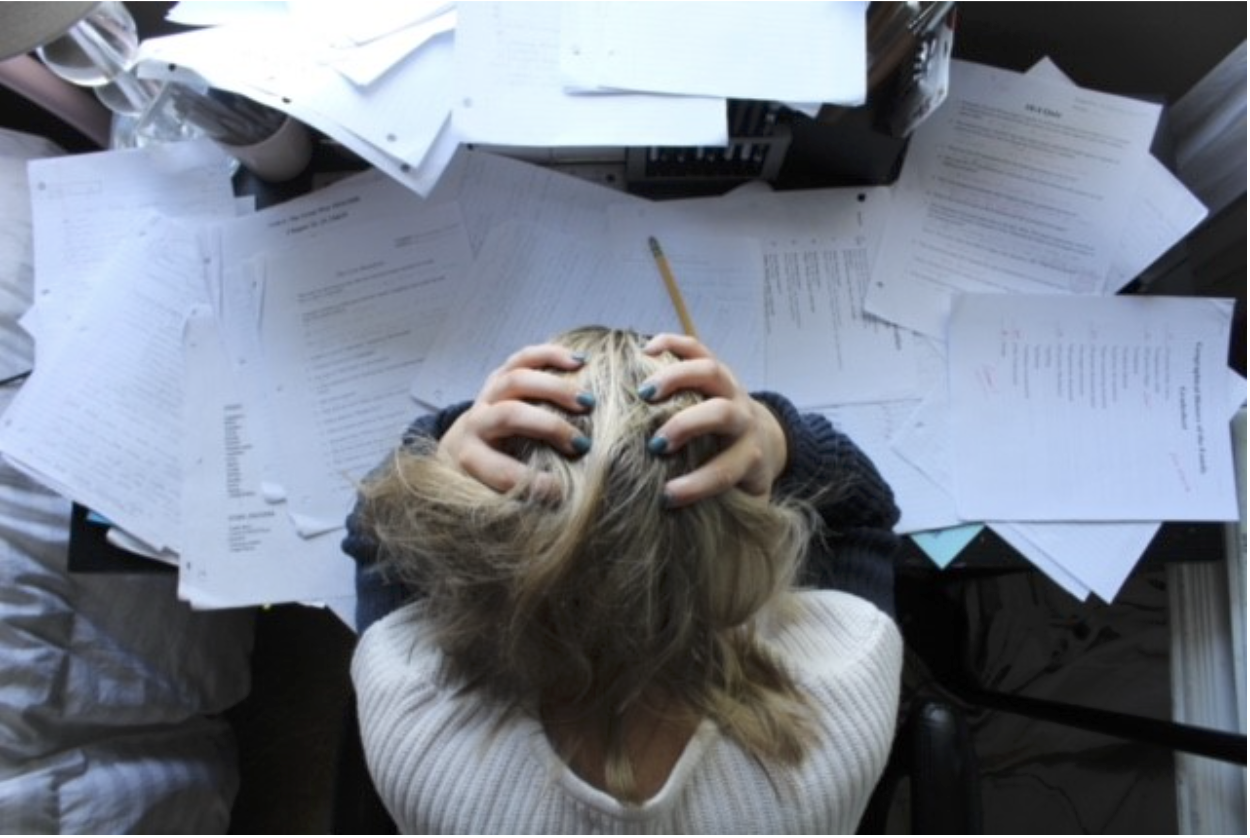
School is where students spend most of their lives, seven hours a day, five days a week, for most of the year. That time is filled with tests, grades, and the pressure to keep up with everyone else. Many students also compare themselves over who got the better score and what college they’ll end up going to.
Some of that pressure is normal, even useful. A little stress helps people focus and get things done. It’s what pushes a student to study the night before an exam or finish an essay a day before the deadline. The problem isn’t the stress itself, but how much of it a student has and for how long. Stress that comes in short periods and then goes away is manageable. Stress that never goes away is a different thing entirely.
The data backs up what students feel. In an American Psychological Association survey of more than 1,000 teens, school was the most common source of stress, 83 percent said it was somewhat stressful and more than half said balancing all of their activities was a major stressor. During the school year, teens rated their stress at 5.8 out of 10. One in three said stress left them feeling overwhelmed or depressed, and 23 percent said they had skipped a meal because of it.
But when the work is too much for too long, stress starts to have a negative impact. It can affect sleep, mood and how well a student can think. Over time, it can lead to anxiety, burnout, and depression. The signs aren’t always obvious. A student who seems fine in class may be running on three hours of sleep, skipping meals to finish assignments or losing interest in the things they used to enjoy. In that same survey, 74 percent of teens reported at least one emotional or physical symptom of stress in the past month even though more than half believed their stress had no affect on their mental health.
For many students, the hardest part isn’t the difficulty of the assignments; it’s finding the time to do them.
“Too much work makes the students stressed,” said junior Jenifer Zelaya. “There needs to be some kind of time to do it instead of other things. School often takes up most of my time, seven hours of school and then some students have activities to do like the day after, then they have homework at nine so they don’t get enough sleep.”
Stress is not only about how much work there is but also about how it stacks. Seven hours in class, then activities, then homework late at night leaves little room for rest. Extracurricular activities deserve more attention in this conversation than they usually get. Sports, clubs, jobs and volunteer work are parts of a student’s life, and they are things colleges want to see, but they are on top of the academics. A student who leaves school at three, practices until five thirty and starts homework at seven has the same number of assignments as a student does who goes straight home.
The CDC recommends that teens get eight to ten hours of sleep a night, but only one in four teens actually get eight hours on average on a school night.
In “Are Teens Adopting Adults’ Stress Habits?” 43 percent of teens who slept less than eight hours on school night reported feeling depressed or sad in the past month compared to 18 percent of those who got eight hours of sleep or more. Fifty percent felt angry or irritatable, 46 percent felt anxious or nervous, and 42 percent felt overwhelmed. In other words, stress keeps students up and losing sleep makes the stress harder to deal with.
Not every student points to the same source of pressure. Junior Kemi Otolorin takes four AP classes and says protecting her mental health is its own responsibility. “I do my best to take care of my mental health,” she said. “School’s a big part of my life and depending on how much you manage your time, it can take up all your time, but I don’t let it.”
That approach takes practice and isn’t for everyone. Managing your time well requires a schedule and a quiet place to work, which not everyone has. For others, the workload doesn’t leave enough hours in the day no matter how much they plan in advance.
Junior Juliana Wilson takes two AP classes and says the hardest classes aren’t always the ones with the heaviest workload. “I’m taking two APs and I think it affects my mental health because sometimes some days are a little difficult,” she said. “School takes up most of your time but I feel like it’s not the APs. It’s the honors and GT classes that take up the most time off me. Sometimes the work causes me to lose sleep. It all really depends on the teacher and how you manage your time.”
Honors and gifted and talented courses work differently. They have no specific exam and the workload is entirely on the teacher. Because these classes are considered the advanced classes, teachers feel pressure to assign more work rather than harder thinking. People often mislabel these classes, but the workload is unpredictable.
None of this means that school should be easy or that there shouldn’t be any stress. A student who isn’t challenged never learns what they are capable of. But there’s a difference between good stress and stress that impacts a student. That’s why supporting students’ mental health can’t be left alone. Students are already doing the hard part, and the structure around them should stop making it harder.