
By Abigale Paterniti, Editor-in-Chief
Every young driver dreads receiving a speeding ticket. Ages 16-26 represent the largest share of traffic stops in Maryland.
Automated speed cameras flag ticket vehicles traveling 12 miles per hour or more, above the posted speed limit. The closest permanent speeding cameras to River Hill is located on Centennial Lane, near Centennial High School. The speed limit is 35 mph; if a driver is traveling over 47mph, they are subject to a $40 fine with a $2 credit card fee.
Especially significant for River Hill students is the possibility that Howard county adds a permanent speeding camera on Clarksville Pike. For one, River Hill is located next to Clarksville elementary school, doubling the amount of traffic and risk. Additionally, Maryland reported that around 57,000 citations were given in 2020 to motorists traveling 20mph or more over the posted speed limit, and the percent of speed-related fatality crashes remains over 50 percent.
“Our goal in Maryland is zero fatalities,” said Maryland MVA Administrator, Christine Nizer, to WYPR, “we are the only state in the county that requires drivers ed for all new drivers.”
Drivers Education is the state’s way of ensuring that every driver earning a Maryland license understands the rules of the road. Juniors and seniors at River Hill, and even a handful of sophomores are subject to Driver’s Ed, typically taken over the summer. The rules associated with a provisional license vary, and despite taking Drivers Ed, students at River Hill are unaware of the differences.
Notably, camera tickets do not add points to a provisional driver’s license and do not affect insurance. However, being pulled over on a provisional license can lead to higher fines, points, increased insurance rates, driver improvement courses, court appearances, and even a 180-day suspension.
“It’s not something that’s well known, I didn’t learn about it in Driver’s Ed.—I wasn’t aware that the side effects of a camera ticket are different from being pulled over for speeding,” said senior Samara Winrose.
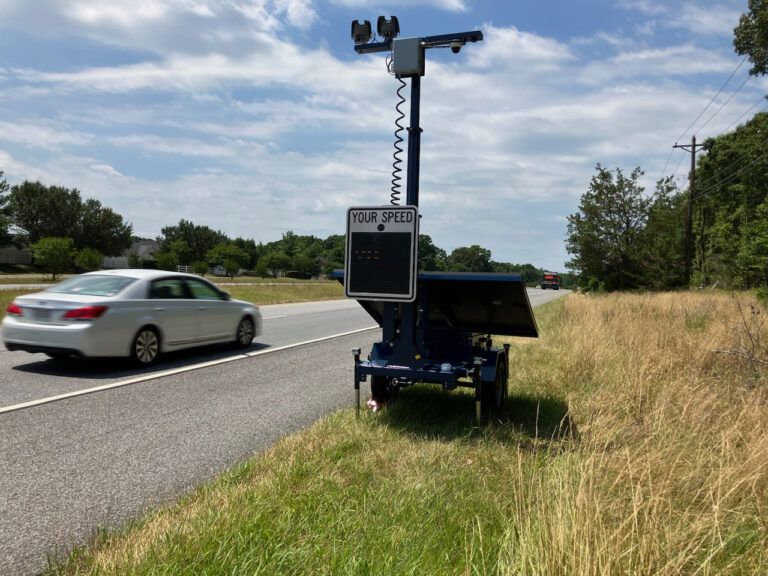
In November 2011, county leaders proposed legislation to authorize using portable speed cameras in school zones, between the hours of 6 a.m. – 8 p.m., to promote low-risk driving among students and teachers, and keep the frequent foot traffic safer from reckless driving.
“I feel like it is dangerous to walk through the parking lot when cars are speeding and not paying full attention to the road and what’s in front of them,” says senior Emily Anderson. “I have not sped when driving to school in the morning. I prefer to leave early to give myself time to drive safely and park on time.”
This traffic is particularly bad between the time of 7:30 – 7:40 a.m., 5 minutes before the first bell, and directly after school 2:35 – 3 p.m. Yet, introducing a permanent speeding camera is controversial among the River Hill student body.
“I would not protest a permanent speeding camera on Clarksville Pike. I feel like it is important to ensure the safety of all students and staff, more than a portable speeding camera does,” said Anderson.
“I don’t think that a permanent speeding camera is necessary,” said Winrose.“The biggest safety concerns are in the morning and afternoons, but on Clarksville Pike cars are bumper to bumper. The only speeding that happens is in the school parking lot.”
Despite being controversial, it is a possibility that a permanent speeding camera, rather than the portables, could be installed on Clarksville Pike that would alter students and teachers day to day. Yet, it remains unknown when, how or if that will actually happen.
“Whether or not a permanent speeding camera is eventually installed, River Hill should take action from within to promote speeding safety for the best interest of everyone,” said Anderson.