
By Benjamin Hong, Co-Editor-in-Chief
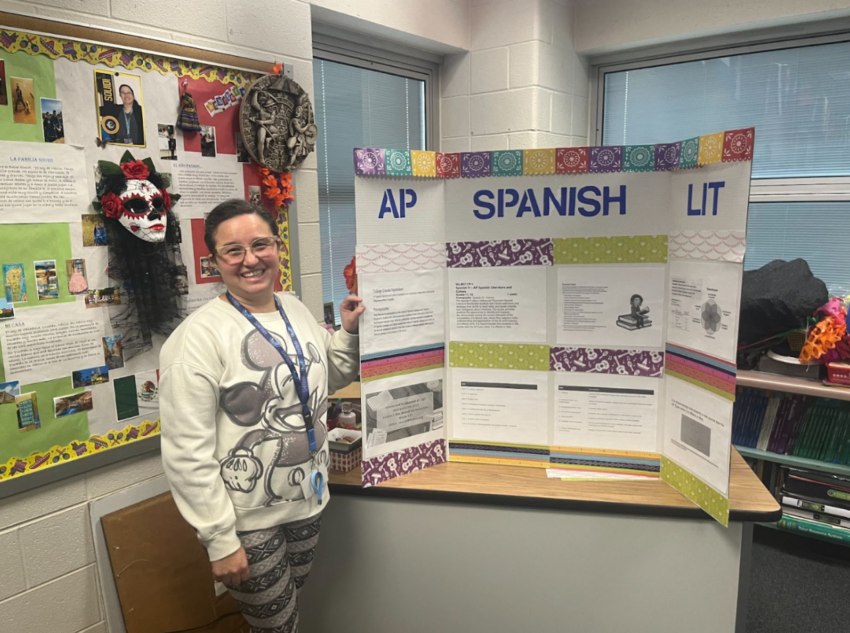
Beginning in the 2026-2027 school year, River Hill High School will begin offering AP Spanish Literature and Culture for the very first time. This course builds upon the precedent of the new Special Topics course series first offered this year by giving advanced Spanish students another way to build upon their existing linguistic skillset while studying influential Spanish-language literature from around the world.
The course will be taught by Dulce Souidi, who has taught Spanish at River Hill for nine years and holds a master’s degree in Spanish literature. She explained that the addition of the course is the result of growing interest from students who want to continue Spanish at a high academic level. “I’m very excited [to be] teaching this class,” Souidi stated. “This is the first time I will be teaching it here, and it’s something I’ve wanted to offer for a long time.”
AP Spanish Literature focuses on reading and analyzing approximately 38 required works selected by the College Board. These include poems, short stories, plays, and excerpts from some notable longer novels, such as Don Quixote. Souidi stressed, however, that the load for prospective students wouldn’t be as intense as it might first seem, making a point to mention that “we won’t read the entire novel […], but we read important sections to understand the important themes and characters.”
The works span several literary periods, encompassing movements such as Romanticism, Realism, and Magical Realism. Given the wide range of time periods this will therefore cover, Souidi is particularly excited to lead discussions revolving around how the politics and events of a work’s time influenced authors’ writing. “What I love about literature is that it gives students a deeper understanding of history and society,” Souidi stated. “You don’t just read a story, you learn why it was written and what was happening at the time.”
Although the focus is on reading and writing, given that it is a literature course, students will still exercise their listening and speaking skills, much as in any other Spanish class, through discussions and presentations. Because of this, Souidi emphasized that students interested in taking the new class should have a strong foundation in Spanish before enrolling, as “there is no time to reteach grammar.”
The course will instead emphasize preparing students to take the AP exam in May, which includes multiple-choice questions that test students’ understanding of literary devices, themes, and movements, as well as free-response questions where students must write analytical essays in Spanish. “We read together, analyze together, and write together,” Souidi said. “Mistakes are part of the learning process, and we will work through them as a class.”
The rigorous nature of the course makes some students hesitant to add it to their already intensive schedules. Evan Chang, a junior currently enrolled in AP Spanish Language and Culture, expressed that the literature course “seems like a good course for those interested in pursuing Spanish, but I would probably pick Advanced Special Topics because I already have a lot of APs planned and Spanish isn’t my main interest.”
As River Hill continues to expand its higher-level course offerings that escalate in difficulty seemingly without end, AP Spanish Literature and Culture hopes to nurture a spirit of curiosity and collaboration without sacrificing student outcomes in the hopes of setting a standard that other courses can follow. As Souidi puts it, “it’s a challenging topic, but it’s very rewarding, because you can come out of the class with a stronger language skill and a better understanding of different cultures.”